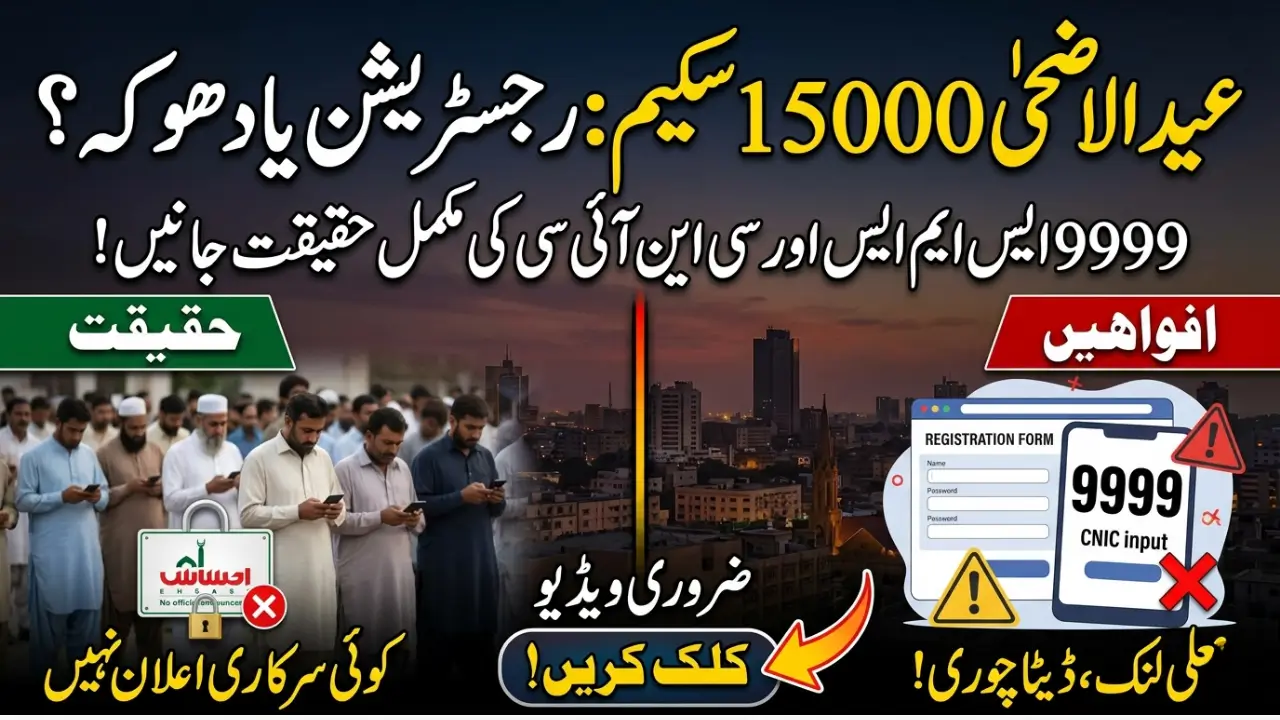
Eid ul Adha 15000 Scheme Registration – Complete Reality Check
The phrase Eid ul Adha 15000 Scheme Registration has become one of the most searched topics in Pakistan before Eid ul Adha 2026. Social media posts, WhatsApp forwards, TikTok videos, and Facebook pages are claiming that families can receive Rs. 15,000 through online registration using their CNIC number.
Many citizens are trying to understand whether the Eid ul Adha Scheme Registration process is officially active or whether these claims are misleading. Searches related to online registration, 9999 SMS verification, and CNIC eligibility checks continue to rise because inflation and Eid expenses have increased household pressure across Pakistan.
This article explains the complete reality behind the Eid ul Adha Scheme Registration, common online scams, registration rumors, and the safest way to verify welfare announcements in 2026.
Read More: Sasta Petrol Program 2026 Registration Process
Is Eid ul Adha Scheme Registration Official?
At present, no verified nationwide announcement has confirmed the Eid ul Adha Scheme Registration through official government channels. Despite this, several websites and social media accounts continue publishing attractive banners and urgent registration messages.
Most viral posts claim that:
- Every family can apply online
- Registration is open for a limited time
- CNIC verification guarantees approval
These claims have created confusion among low-income households already registered in public welfare databases.
The discussion around Eid ul Adha 15000 Scheme Registration increased after earlier relief programs used SMS-based eligibility systems for financial assistance.
Why Eid ul Adha 15000 Scheme Registration Is Trending
Public interest in the Eid ul Adha Scheme Registration is linked with rising Eid expenses in Pakistan. Livestock prices, grocery costs, transport fares, and utility bills have increased during 2026, making financial support an important topic before Eid.
Social media creators often use welfare-related headlines to attract views and shares. Since many Pakistanis are familiar with CNIC verification systems, people quickly believe claims connected with online registration.
Read More: Benazir Taleemi Wazaif Registration for Rs. 5000
Main Reasons Behind Public Interest
- Rising Qurbani and grocery expenses
- Existing awareness of welfare programs
- Viral social media videos about cash assistance
The phrase Eid ul Adha Scheme Registration has therefore become highly searched across Google, YouTube, and Facebook.
How Fake Eid Registration Pages Operate
Many fake websites are using the popularity of the Eid ul Adha Scheme Registration to collect user data. These pages often copy official-looking designs, Urdu text, and government-style logos.
Some suspicious pages ask users for:
- CNIC numbers
- Mobile verification codes
- Banking information
Others redirect users toward unrelated applications filled with advertisements.
Fraud pages often create pressure by claiming that the Eid ul Adha Scheme Registration deadline will close within hours. This tactic pushes users to submit information quickly without checking authenticity.
Read More: Current Silver Rate in Pakistan Today
Safe Ways to Verify Eid ul Adha Scheme Registration
Citizens should always verify the Eid ul Adha Scheme Registration through trusted sources before entering personal details online.
Official welfare announcements are usually shared through:
- Government press conferences
- National television channels
- Verified public institutions
- Official government websites
People should avoid clicking unknown registration links shared through random WhatsApp groups or Facebook comments.
Important Online Safety Steps
Check the Website Address
Official Pakistani government websites commonly use:
- .gov.pk
- .pk
Never Share Sensitive Codes
No genuine welfare program asks for:
- ATM PINs
- Mobile banking passwords
- OTP security codes
Read More: Maryam Nawaz Dastak Program 2026
Avoid Fake Urgency
Messages claiming “last registration day” or “instant approval” are often linked with online fraud.
CNIC Verification Rumors in Pakistan
One major reason behind confusion is the repeated mention of online CNIC verification connected with the Eid ul Adha Scheme Registration. Since previous relief campaigns included SMS-based systems, many people assume every viral registration code belongs to a government initiative.
Some videos also combine unrelated welfare programs into one story, making verification difficult for ordinary users.
Citizens should remember that official welfare announcements are usually supported by public notifications and recognized government communication channels.
Public Awareness and Digital Safety
The rise of the Eid ul Adha 15000 Scheme Registration trend highlights the importance of digital awareness in Pakistan. Fraud attempts increase before major religious events because many families search for financial support.
Families should guide elderly relatives and first-time internet users about:
- Fake registration links
- Fraudulent SMS messages
- Suspicious social media pages
Careful verification can prevent financial loss and identity misuse.
Read More: Online 8171 CNIC Verification
FAQs
Is Eid ul Adha 15000 Scheme Registration officially confirmed?
No publicly verified nationwide announcement has confirmed the scheme so far.
Can citizens apply through CNIC online?
No officially verified registration portal connected with the scheme has been announced.
Why is Eid ul Adha Scheme Registration trending?
The topic became popular because of rising Eid expenses and viral social media claims.
Conclusion
The growing discussion around Eid ul Adha 15000 Scheme Registration shows how quickly financial assistance rumors spread before Eid in Pakistan. Although many social media posts claim that registration is open through CNIC verification and SMS codes, no publicly verified nationwide announcement has confirmed these claims. Citizens should remain careful while sharing personal details online and rely on trusted official communication channels for welfare updates in 2026.
Read More: Electricity Bill Relief Under the Cross-Subsidy Program